Navigating Russia's Crypto Banking Ban: Bitcoin Trading Workarounds and Alternatives in 2026

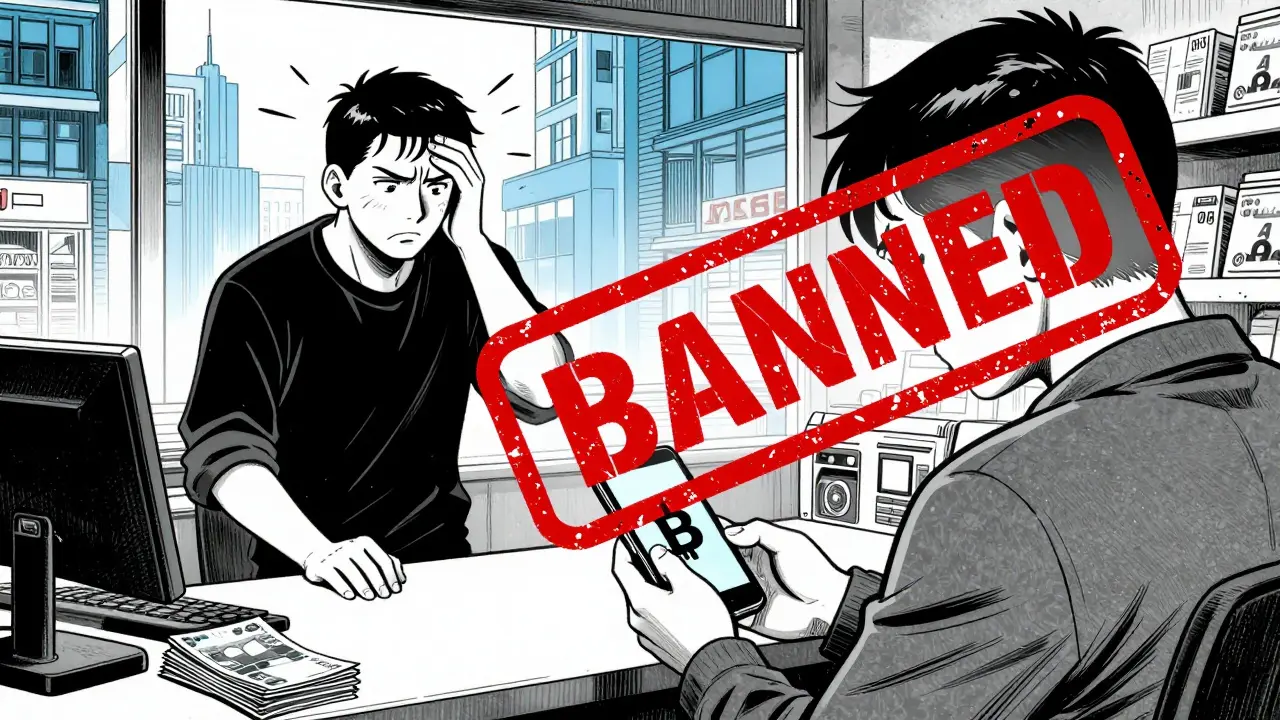
Imagine trying to buy a used car or pay for rent with Bitcoin, only to have your bank card frozen because the transaction looked 'suspicious.' This is no longer a hypothetical nightmare for many residents of Russia. Since September 1, 2025, the financial landscape has shifted dramatically. The Central Bank of Russia (CBR) introduced strict cash withdrawal limits that directly impact how people trade cryptocurrency. If you are holding digital assets in Russia today, understanding these new rules isn't just about compliance-it’s about keeping your money accessible.
The core issue isn't that buying Bitcoin is illegal. It’s that moving fiat currency (rubles) into and out of the traditional banking system to facilitate those trades has become heavily monitored. Banks now have the power to cap daily ATM withdrawals at 50,000 rubles (approximately $600 USD) for 48 hours if they detect unusual activity. For casual users, this might be an annoyance. For active traders and miners, it is a significant operational hurdle.
Understanding the New Cash Withdrawal Restrictions
To navigate the current environment, you first need to understand exactly what triggers these blocks. The legislation implemented in late 2025 was designed primarily to combat fraud. In the second quarter of 2025 alone, the CBR reported over 273,000 fraud cases totaling 6.3 billion rubles. The government’s response was aggressive monitoring.
Banks are now required to flag specific behaviors that deviate from your normal pattern. You don’t need to be a criminal to trigger these alerts; sometimes, simply acting differently than usual is enough. Here are the primary triggers that can lead to a temporary freeze on your cash access:
- Unusual Withdrawal Amounts: Taking out large sums of cash that differ significantly from your historical average.
- Atypical ATM Usage: Using ATMs in locations where you rarely transact, or using multiple ATMs in quick succession.
- Sudden Spikes in Phone Activity: Receiving calls from many new numbers, which banks associate with potential social engineering scams.
- Mobile Banking Changes: Changing authorization codes or logging in from a new device immediately before a large transfer.
- Rapid Loan Utilization: Withdrawing cash within 24 hours of registering for a new loan or increasing a credit limit.
- Large Inter-Account Transfers: Moving more than 200,000 rubles between accounts without a clear, recurring pattern.
For cryptocurrency traders, these rules hit hard. Peer-to-peer (P2P) trading often involves receiving rubles from strangers and then withdrawing them or transferring them quickly. This behavior looks identical to the patterns banks are trained to block. The result? Your funds get stuck in your bank account for two days while you try to complete a trade.
The Decline in Global Adoption Rankings
These regulatory pressures have had a measurable effect on Russia’s position in the global crypto market. According to Chainalysis’s 2025 Global Adoption Index, Russia fell from 7th place in 2024 to outside the top 10. This drop is significant, especially considering that crypto usage actually increased after the 2022 invasion of Ukraine when sanctions cut off access to SWIFT and other traditional financial channels.
Neighboring Ukraine faced similar challenges under martial law, dropping from 6th to 8th place. However, the difference lies in the intent. Ukraine’s adoption was driven by necessity and remittances. Russia’s decline reflects a state-led effort to restrict domestic circulation while simultaneously encouraging the use of cryptocurrencies for international trade and sanctions evasion. This dual stance creates a confusing environment for the average citizen who just wants to diversify their savings.
Workaround 1: Optimizing Peer-to-Peer (P2P) Trading
Despite the bans, there is no explicit prohibition on acquiring cryptocurrency in Russia. The workaround lies in how you handle the fiat side of the equation. P2P platforms remain the most popular method for retail traders, but they require a change in strategy.
You can no longer rely on instant, high-volume cash transactions. Instead, successful traders are adopting a 'slow and steady' approach. Here is how to adapt your P2P workflow:
- Spread Out Transactions: Avoid moving large sums in a single day. If you need to sell 500,000 rubles worth of Bitcoin, break it down into smaller trades across several days to stay under the radar of automated fraud detection systems.
- Use Established Counterparties: Build relationships with trusted buyers and sellers. Banks are less likely to flag transfers to accounts you interact with regularly. Avoid one-off transactions with brand-new accounts whenever possible.
- Avoid QR Code Payments: While convenient, QR code payments are closely monitored as they can be linked to unauthorized merchant activities. Stick to standard bank transfers for larger amounts.
- Maintain Consistent Patterns: Try to conduct your crypto-related banking activities at similar times and from similar devices. Consistency helps establish a 'normal' baseline for your bank’s algorithms.
This method requires patience. It takes longer to liquidate large positions, but it keeps your banking relationship intact. Remember, the goal is to look like a regular salary earner, not a money mule.
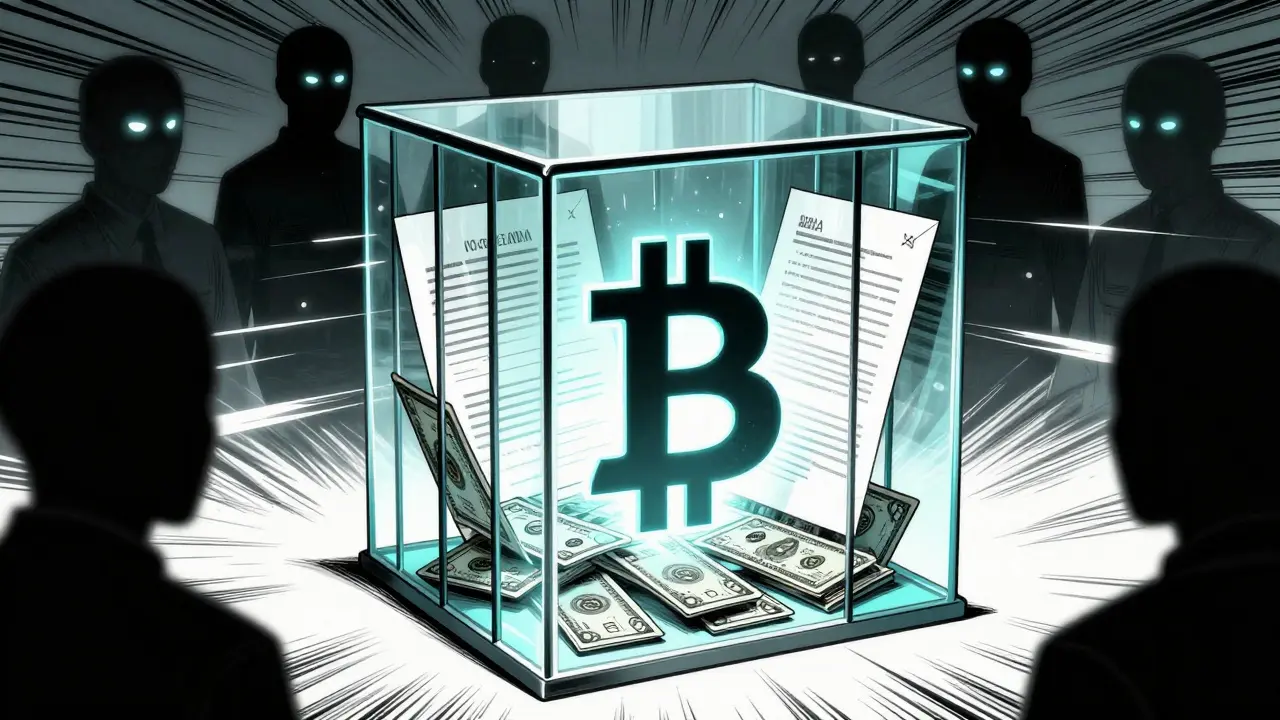
Workaround 2: Leveraging Foreign Platforms and Non-Russian Banks
Another viable alternative is to move your operations outside the direct reach of Russian banking regulations. Many Russian citizens are turning to foreign non-custodial wallets and international P2P networks that support local payment methods but settle in stablecoins or Bitcoin.
Using platforms based in jurisdictions with clearer crypto regulations allows you to bypass some of the domestic scrutiny. However, this comes with its own risks. You must ensure that the platform supports reliable fiat on-ramps and off-ramps that aren't dependent on Russian banks. Some users are exploring partnerships with fintech companies in neighboring countries or using multi-currency cards issued by offshore entities.
It is crucial to verify the legitimacy of any foreign service. Scams targeting frustrated Russian traders are on the rise. Always check community reviews and start with small test transactions before committing significant capital.
Workaround 3: The Rise of Digital-First Business Models
For professional traders and mining operations, the old model of cash-heavy exchange offices is dead. Small exchange offices that relied on physical cash deposits are struggling to survive. The future belongs to digital-first approaches.
Industry experts predict a shift toward integrated digital ecosystems where fiat and crypto balances are managed within compliant, licensed environments. Evgeny Masharov, a member of the Russian Civic Chamber, has advocated for creating a 'crypto-enabled bank' similar to the model seen in Belarus. Such an institution would allow legal cashing out of mining earnings and bring shadow transactions into the formal economy.
Until such infrastructure exists, businesses are adapting by maintaining detailed transaction histories and working directly with their banks to whitelist specific counterparties. This proactive communication can help prevent unnecessary freezes. If you run a business, consider opening a dedicated corporate account solely for crypto-related activities and educating your bank manager about your operations.

Comparison of Trading Methods Under Current Regulations
| Method | Risk Level | Speed | Bank Scrutiny | Best For |
|---|---|---|---|---|
| P2P Trading (Local) | Medium | Slow (due to limits) | High | Retail users with small volumes |
| Foreign Exchanges | Low-Medium | Fast | Low (if no RUB involved) | Experienced traders with offshore accounts |
| Cash Exchange Offices | High | Instant | Very High (targeted by bans) | Emergency small transactions |
| Crypto Debit Cards | Medium | Instant | Medium | Daily spending, not large transfers |
The Future: State-Controlled Infrastructure vs. Decentralization
Where does this leave us looking ahead? The trend is clear: Russia is moving toward a tiered system. On one hand, the government encourages institutional players and qualified investors-those with portfolios exceeding 100 million rubles-to participate in a regulated experimental legal regime. On the other hand, retail access remains tightly controlled.
The Central Bank continues to oppose the free circulation of decentralized currencies for domestic payments. However, the pressure from the mining industry and the need for international trade tools may force compromises. Proposals for state-controlled crypto infrastructure are gaining traction. We may see the emergence of licensed domestic exchanges that operate under strict KYC (Know Your Customer) and AML (Anti-Money Laundering) protocols.
For now, the key is adaptability. Monitor your bank statements closely, communicate with your financial institution, and avoid triggering the automatic fraud filters. The technology hasn't changed, but the way we interact with our banks around that technology has evolved. Stay informed, stay patient, and prioritize security over speed.
Is it illegal to trade Bitcoin in Russia in 2026?
No, buying and selling cryptocurrency is not explicitly illegal for individuals in Russia. However, using cryptocurrency for domestic payments is prohibited, and banks strictly monitor transactions that resemble money laundering or fraud. The restrictions focus on the movement of fiat currency (rubles) rather than the digital assets themselves.
What happens if my bank freezes my account due to crypto trading?
If your bank detects suspicious activity, they may limit your daily ATM withdrawals to 50,000 rubles for 48 hours. In severe cases, they may block all outgoing transfers until you visit a branch to verify your identity and explain the source of funds. It is crucial to maintain documentation of your trades and cooperate fully with bank inquiries to resolve the issue quickly.
How do I avoid triggering the 50,000 ruble withdrawal limit?
To avoid triggering limits, maintain consistent transaction patterns, avoid sudden large withdrawals, and spread out your P2P trades over several days. Do not use new devices or change mobile banking details right before making large transfers. Building a history of regular, predictable behavior with your bank is the best defense against automated flags.
Are there any legal centralized exchanges operating in Russia?
Currently, there are no major centralized cryptocurrency exchanges legally operating within Russia for the general public. Most trading occurs through P2P platforms or foreign exchanges. Lawmakers have discussed licensing domestic exchange networks, but as of mid-2026, the market remains dominated by informal and international channels.
Can I still mine Bitcoin in Russia?
Yes, but with restrictions. Mining is banned in 10 out of 46 regions as of January 2025 due to energy concerns. In permitted regions, miners face challenges in cashing out earnings due to banking restrictions. Many miners are turning to direct crypto-to-crypto swaps or seeking specialized financial services to liquidate their profits without triggering fraud alerts.
Matthew Malone
June 7, 2026 AT 18:52Look at this absolute circus. The state decides they want to control every ruble while simultaneously encouraging sanctions evasion for their elite cronies. It is the definition of a hypocritical double standard that only works because the average citizen has no real power to push back. They ban domestic payments but wink at international trade? Please. This isn't regulation, it's just another layer of extraction designed to keep the population docile and financially illiterate while the insiders play their games. You can't have it both ways, and pretending this is about 'fraud prevention' is insulting to anyone who actually understands how money laundering works.
verna kennedy
June 9, 2026 AT 07:03The article misses the forest for the trees by focusing on workarounds instead of the systemic failure here. It is fascinating how people are still trying to optimize within a broken system rather than questioning why the banking infrastructure is so fragile that a few large transactions trigger a lockdown. If your bank cannot distinguish between a salary earner buying groceries and someone moving crypto, perhaps the issue is not the user but the incompetence of the financial institutions. We see similar patterns in other authoritarian regimes where financial surveillance is used as a tool for social control rather than security. It is a slippery slope that leads to total loss of privacy.
Greg Lewis
June 10, 2026 AT 13:10why do we even care about fiat anymore its all just numbers on a screen controlled by men in suits who hate freedom anyway i think the whole concept of banking is outdated and should be replaced by direct peer to peer trust networks but then again maybe i am just crazy for thinking that way
JEVON HALL
June 11, 2026 AT 11:08hey guys just wanted to share my experience with this stuff 🙌 i found that using multiple small accounts helps a lot but you gotta be super careful not to link them too obviously 😅 the key is consistency like the post says but also patience dont rush it or you will get flagged instantly trust me i learned that the hard way last year 💸
Dr Lynea LaVoy
June 13, 2026 AT 10:29I appreciate the detailed breakdown of the triggers, especially the point about mobile banking changes. Many users don't realize that changing authorization codes right before a transfer is a massive red flag for automated systems. It is crucial to educate yourself on these nuances because ignorance is not a defense when dealing with algorithmic fraud detection. I recommend keeping a dedicated device for crypto-related activities if possible, and never mixing personal banking habits with trading behaviors. This separation creates a clear boundary that helps maintain a 'normal' baseline for your primary accounts. Safety first, always.
Caralee Robertson
June 13, 2026 AT 22:40i totally agree with the part about spreading out transactions it feels so stressful waiting days to move money but what else can we do right?? i tried using a foreign platform once and it was a nightmare cus they didnt support rubles well so i had to go back to p2p which is slow but safer i guess lol
aaliyah zahid
June 14, 2026 AT 13:47Oh, look at us, playing hide and seek with the central bank like it's some grand strategy game. The sarcasm is palpable, isn't it? We are essentially being treated like criminals for wanting to hold assets that aren't printed by a government that loses value every day. It is quite the spectacle watching people scramble to find loopholes in regulations that were clearly designed to close every single one. But hey, at least we have the thrill of the chase and the constant fear of a frozen account to keep us humble. Truly a unique cultural experience.
Erik Kirana
June 16, 2026 AT 09:53It is evident that the majority of commenters here lack a fundamental understanding of financial compliance protocols. The measures described are not arbitrary; they are necessary safeguards against illicit flows. To suggest otherwise is to demonstrate a profound ignorance of global anti-money laundering standards. One must adhere to the rules established by legitimate financial institutions rather than seeking to circumvent them through amateurish tactics. Proper documentation and transparent reporting are the hallmarks of a responsible trader, not the shadowy maneuvers discussed in this thread. Educate yourselves before offering unsolicited advice.
dan kaffeman
June 17, 2026 AT 16:44This entire situation is a result of weak leadership and a populace that refuses to accept reality. The state knows exactly what it is doing, and those who complain are simply victims of their own greed. Real patriots understand that national stability requires strict financial controls. Those looking for loopholes are effectively undermining the sovereignty of the nation. It is pathetic to watch people whine about inconvenience when the greater good of economic security is at stake. Stop acting like entitled children and follow the law.
Meg Gran
June 18, 2026 AT 18:39the irony is that by trying to stop fraud they are creating more opportunities for scammers who know how to exploit these very restrictions while honest users suffer i mean really who does this benefit except the banks who love the fees and the hassle isnt it funny how the system always protects itself at the expense of the little guy anyway im done trying to make sense of it all
Kelly Tenney
June 19, 2026 AT 23:03Let's remember that we are all navigating this together and supporting each other through information sharing is key. It is easy to feel overwhelmed by the complexity of these new rules, but breaking them down step by step makes them manageable. Focus on building consistent habits and communicating openly with your financial partners. We can adapt to these changes without losing our sense of security or community. Stay positive and keep learning from each other's experiences.